

Successor generation – the “trial by fire” plan
Planning the roadmap for building a successor generation in family businesses often begins one generation ahead. The incumbent generation usually spends 15 to 25 years “tempering” the new leadership generation to be capable of carrying on the family enterprise. Succession in family businesses has long ceased to be understood merely as the transfer of assets or management positions from the founding generation to the next (or from one generation to another). According to Sharma et al. (2003), succession is a continuous process, in which the transfer includes not only leadership roles and ownership but, more importantly, the cultural values, entrepreneurial spirit, and long-term vision cultivated by the preceding generation. The complex nature of succession makes it one of the greatest challenges for the continuity of family businesses, where the boundary between business logic and family ties is ever-present.
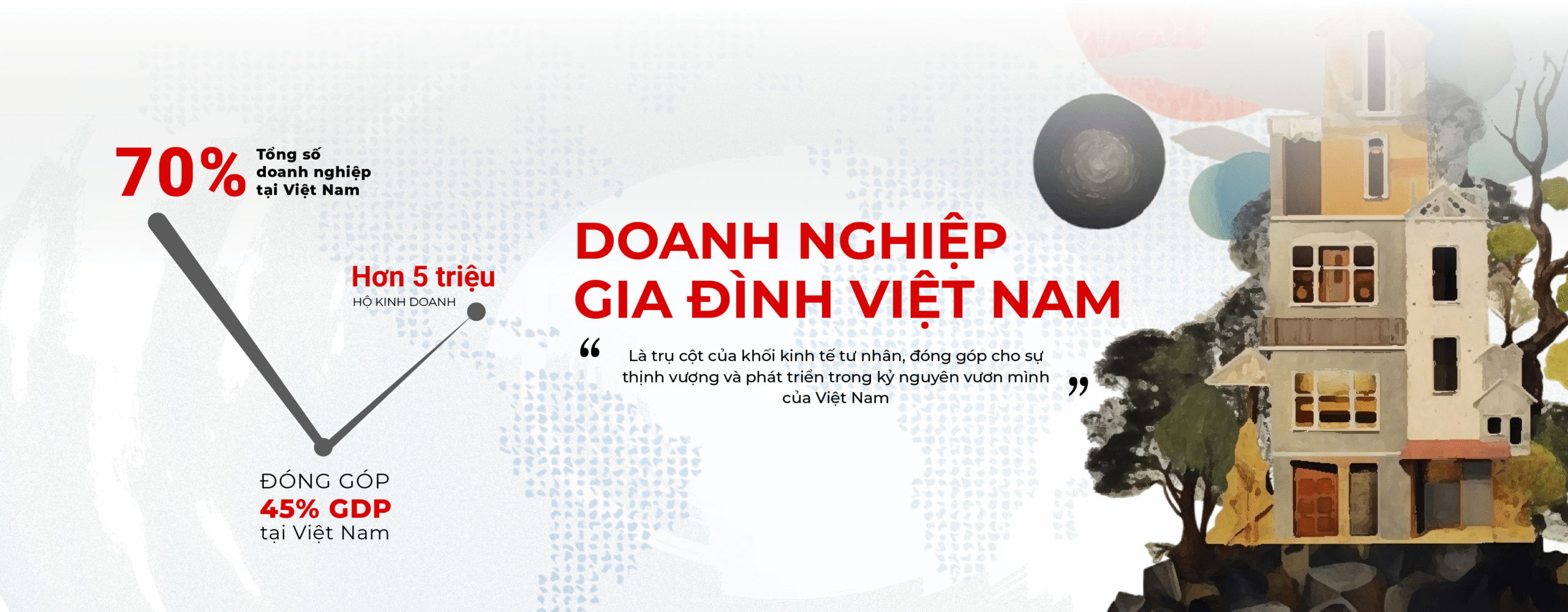
At the heart of the succession process is the identification and development of the successor generation – individuals who are not only beneficiaries but also bear the responsibility of continuing the leadership mission. Research by Le Breton-Miller, Miller & Steier (2004) defines successors not only as those who legally inherit executive positions but also those with the potential to carry on the leadership mission in an increasingly volatile business environment. Globally, studies show that up to 70% of family businesses fail to transition successfully between the first and second generations, primarily due to the lack of systematic processes for evaluating and developing successors (Poza & Daugherty, 2014). In Vietnam, many private conglomerates are entering critical transition phases, yet in practice, the choice of successors often lacks systematic evaluation criteria, leading to decisions driven by sentiment or superficial achievements.
Successor generation – 4 pillars for selecting the right person
In this context, Fernández-Aráoz (2020) proposed a framework for assessing “leadership potential” through four factors: (1) Curiosity, (2) Insight, (3) Engagement, and (4) Determination. This evaluation framework offers a more systematic approach, guiding the succession process toward professionalism and sustainability.

Figure: 4-Factors model for assessing the potential of the next generation
Curiosity refers to the intrinsic drive to learn and the ability to continually question what is taken for granted. Successors who possess this trait proactively expand their knowledge beyond the family’s traditional business areas, creating the foundation for innovation. In a context where companies must constantly adapt to technological breakthroughs and market disruptions, curiosity is a prerequisite for building flexible and creative strategic thinking.
Insight reflects the ability to connect disparate pieces of information into systemic understanding. This is not merely analytical capability but also strategic intuition, enabling successors to identify hidden opportunities and risks in complex environments. Those with insight tend to maintain a cautious attitude, avoid reacting emotionally, and weigh the impact on multiple stakeholders, employees, shareholders, and customers thanks to empathy developed from a holistic perspective.
Engagement is the degree of emotional and intellectual connection with the future leadership role. It distinguishes those who act out of obligation from those driven by intrinsic aspiration. Engagement reflects not only long-term commitment but also the ability to take responsibility in the unique environment of a family business, where family expectations intertwine with economic and social complexities.
Determination is the ability to maintain consistency and perseverance under uncertain conditions. According to Fernández-Aráoz (2020), this is the most discriminating factor between potential candidates and truly suitable successors. Determination is not shown by short-term achievements but by the unwillingness to be defeated by failure, the ability to learn from mistakes, and the persistence to uphold the leadership mission during crises or internal conflicts.
The evaluation of these four factors should rise above biases about age and gender. Fernández-Aráoz (2020) notes that women often score higher than men in the first three factors – a finding worth reflecting on for companies that still prioritize the eldest son. Similarly, potential does not solely exist in the younger generation: a 45-year-old uncle or a 50-year-old cousin may still be the most suitable leader if they demonstrate these qualities.
Successor generation – “testing strength” in a VUCA world
According to Fernández-Aráoz (2020), VUCA refers to an environment characterized by volatility, uncertainty, complexity, and ambiguity. In this context, traditional criteria such as experience, age, or loyalty are losing their decisive role. Instead, recent studies emphasize the predictive value of “soft” capabilities such as curiosity, insight, engagement, and determination. In particular, the four core factors Fernández-Aráoz (2020) outlined can help successors not only maintain the organization but also lead strategic transformation when business models are challenged.
Mr. Ly Huy Sang – the successor of Minh Long I Company – is a prime example of how a successor can apply these four factors to navigate a VUCA environment. Unlike his father, who focused on production expertise and craftsmanship, Sang charted a development path through brand innovation, integrating technology into customer experiences, and expanding external relations. His restructuring of products toward contemporary artistry, investment in digital communications, and targeting of international markets reflect strategic adaptability – an essential leadership capability in the modern era.
Specifically, his curiosity is demonstrated by learning from business models in Japan, Germany, and demanding markets like the US. His insight enables him to recognize the need not only to “sell products” but also to “tell Vietnam’s story” through each ceramic piece. Engagement is evident in his assumption of the communications role, representing the brand at events, and engaging with the media during crises. Finally, determination allows him to withstand the pressure of tradition and internal conflicts while persistently pursuing modernization.
The four factors proposed by Fernández-Aráoz (2020) are not isolated selection criteria but an interacting value system that reflects the successor’s internal depth in reconciling tradition and innovation. When properly identified and nurtured, these qualities can help family businesses not only survive the transition period but also thrive in a VUCA environment. Succession then ceases to be the endpoint of one generation but becomes the starting point of a cycle of selective, resilient, and visionary growth.
Reference
Fernández-Aráoz, C. (2020, January 31). Developing the next generation of leaders in your family business. Harvard Business Review.
Breton–Miller, I. L., Miller, D., & Steier, L. P. (2004). Toward an integrative model of effective FOB succession. Entrepreneurship Theory and Practice, 28(4), 305–328. https://doi.org/10.1111/j.1540-6520.2004.00047.x
Fernández-Aráoz, C. (2020, January 31). Developing the next generation of leaders in your family business. Harvard Business Review.
Sharma, P., Chrisman, J. J., & Chua, J. H. (2003). Succession planning as planned behavior: Some empirical results. Family Business Review, 16(1), 1–15. https://doi.org/10.1111/j.1741-6248.2003.00001.x
Poza, E. J., & Daugherty, M. S. (2014). Family Business (4th ed.). Cengage Learning.
Source: FBV Team