

Family business is a concept “implicitly understood” in policies on private economic development. Identifying private economic development as the most important driving force from Resolution 68-NQ/TW creates the most positive space for family businesses that are growing rapidly, although the concept is not mentioned in policy or law. Surely family businesses have been developing from “silent” to “pillar” under the general name of the private economic sector in Vietnam.
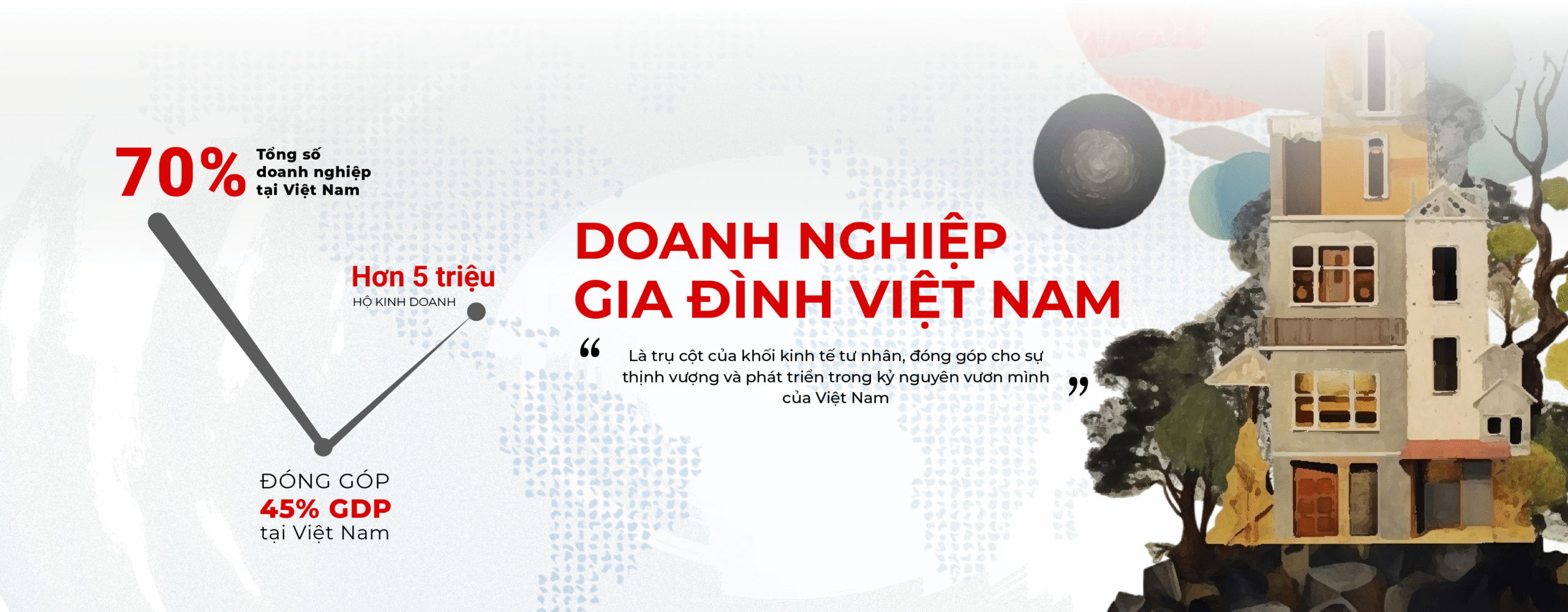
From the 6th Party Congress that recognized the individual economic sector to 1991 when the private economy was considered one of the five economic components to encourage development, that can be seen as the “dawn” for the first “entrepreneurial generation” of Vietnamese family businesses to rise, though before that the spirit of “family entrepreneurs” was already strong. The private economy has increasingly been raised in importance over the past 40 years; at the 9th Party Congress the private economy was confirmed to have an important and long-term position (Resolution 13-NQ/TW in 2002), at the 10th and 11th Congresses it was considered an important driving force, and at the 12th Congress it was decided to promote the private economy. The 13th Congress regarded the private economy as one of the three important pillars of national development and entrepreneurs became the core force in building and protecting the country. Naturally, with the unique capacity of family businesses, they have grown stronger, more structured, and account for more than 80% of private enterprises.
Family businesses or family-oriented companies are identified through features: (1) family members directly control the company with the highest leadership position, (2) asset control is inherited from the founding generation and descendants holding important positions in management or key titles, (3) one family member holds more than 50% of shares, (4) family members hold voting rights of 51% or more, (5) at least one family member inherits from the second generation and the family controls voting rights as major shareholder. Therefore, whether called family business or not, the essence of “family” in business still exists and develops “naturally” in Vietnam. Many family businesses are transferring to the second generation to continue the legacy, and many private enterprises formed in the past 20 years are also bringing family members to step by step assert themselves in the succession journey.
History proves that family business is the earliest organizational form of production and trade in human society. From 2000 BC, noble or merchant families organized production and exchange of goods through closed households. In ancient Rome, records said that the control of a family included blood relations, assets, slaves owned, production and trade activities, all inheritance “passed from father to son.” The clearest model of family business recorded in academia was in the 15th century, when concepts of craft families, merchant families, business guilds, and family enterprises developed prosperously in Italy, China, Germany, and Asian countries. From the 19th century until now, the industrial revolution exploded, many family businesses developed into large global groups, maintained prosperity for centuries, and became pillar enterprises symbolizing national identity. Many global conglomerates as family businesses dominate most key industries and become actors influencing economic development in countries around the world.
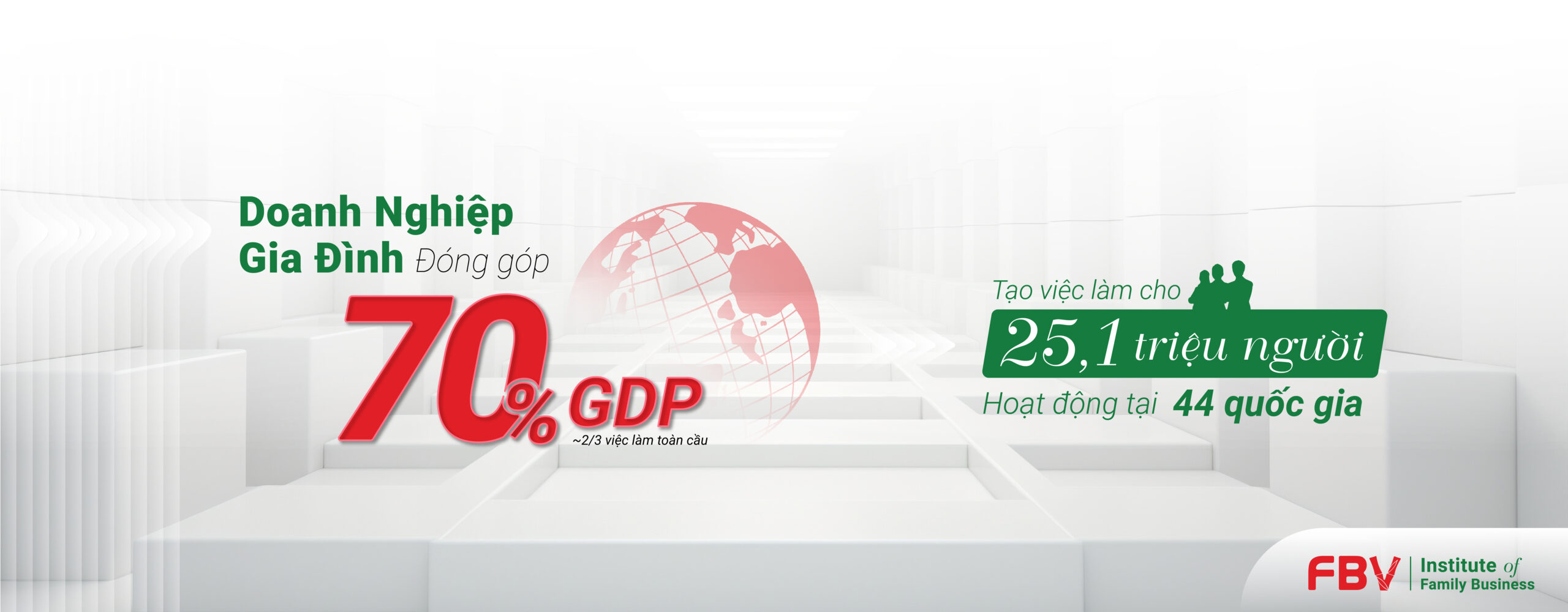
Family businesses contribute greatly to all economic, political, and social activities, and create 65–70% of global GDP. The group of the 500 largest family businesses generates 8.8 trillion USD per year, equivalent to the third largest economy in the world. According to reports, in the United States family businesses contribute about 60% of GDP, in Asia about 70%, and in Europe about 70% of the economy. In Vietnam, if only counting domestic private enterprises and individual business households, they contribute about 50% of GDP, with more than 90% of businesses being family companies or family-oriented. Moreover, family businesses contribute 60–70% of jobs, link with and develop local areas, preserve traditional industries, and are pillars in core industries worldwide. Many family businesses are local or national cultural symbols because of inheritance and craft transmission, and many business secrets are preserved across generations. More importantly, family businesses always emphasize “protecting family legacy,” so assets and heritage are prioritized for long-term existence, which is also important for national development.
The “family” nature and “ecosystem of family relations” as the main factor deciding all business activities in family businesses is a unique value system. The vision of family business is intergenerational, bonded by blood and “family affection,” leadership hierarchy, respect for preserving identity and family honor, and all thinking based on common assets in a sustainable and inherited way. Therefore, family members are nurtured for business early, the next generation is trained from family influence to business management, the aspiration to inherit legacy is anchored in every thought and action, family members and key personnel value attachment, and family resources serve both family members but are also transformed into the business. Many researchers say these features make family businesses hard to copy.
The resilience, endurance, flexibility, and response to crises of family businesses are better than other business models. Research shows that family businesses recovered better in the 2008 financial crisis, grew faster after Covid-19, and in the economic downturn of the past 3 years, they cut labor slightly and recovered faster than others. When family businesses face difficulties, they tend to accept losses to maintain business and protect legacy at all costs. Business strategies are built long by leadership generation for about 20–30 years, helping them overcome hardship better. Concentrated leadership also helps family businesses decide quickly and respond flexibly in many situations. In finance, family businesses tend to be more cautious and prepare better for risks.
Family businesses are surely pioneering actors in the strategic goals of Resolution 68-NQ/TW on promoting Vietnam’s internal economic strength, sustainable development, business model transformation based on modern technology, and international integration to raise Vietnamese enterprises in the global market and develop entrepreneurs with national aspiration, courage, and business ethics. Even if not mentioned in policy, family businesses need to be a research and teaching subject at institutes and universities in Vietnam in the coming time. Leading universities in the world all have centers, research institutes, consulting and teaching on all aspects of family business, they have programs from bachelor to doctorate in family business, and leading consulting firms all have dedicated services for family businesses. The target of developing 2 million private enterprises by 2030 will increase the scale of family businesses as a natural rule, making them the pillar of the rapidly developing private economy and contributors to national prosperity.
Author: ThS. Huynh Phuoc Nghia
Economic Expert, UEH University.