

History of the 500 Family Business Index
The 500 Family Business Index was officially announced for the first time in 2015 as a joint effort between the global auditing firm EY and the University of St. Gallen (Switzerland). The goal of the index is to provide an academic and practical framework to identify, track, and analyze the largest family businesses in the world based on consolidated revenue. According to EY, the index is updated every two years, and the latest version in March 2025 has expanded in scale and impact far beyond the limit of a simple ranking tool.
The 2025 report shows that the 500 largest family businesses worldwide have total revenue of up to 8.02 trillion USD, equivalent to the third largest economy in the world if combined as an independent nation (EY, 2025), only behind the United States and China. The report also indicates that 84% of the companies on the list are headquartered in North America and Europe, with the United States continuing to lead with 118 businesses, followed by Germany (78 businesses), France, Switzerland, and Italy. Meanwhile, Asian countries have only begun to appear on a smaller scale, mainly from Japan, Korea, India, and China.
The 2025 outlook: Highlights from the 500 Family Business Index
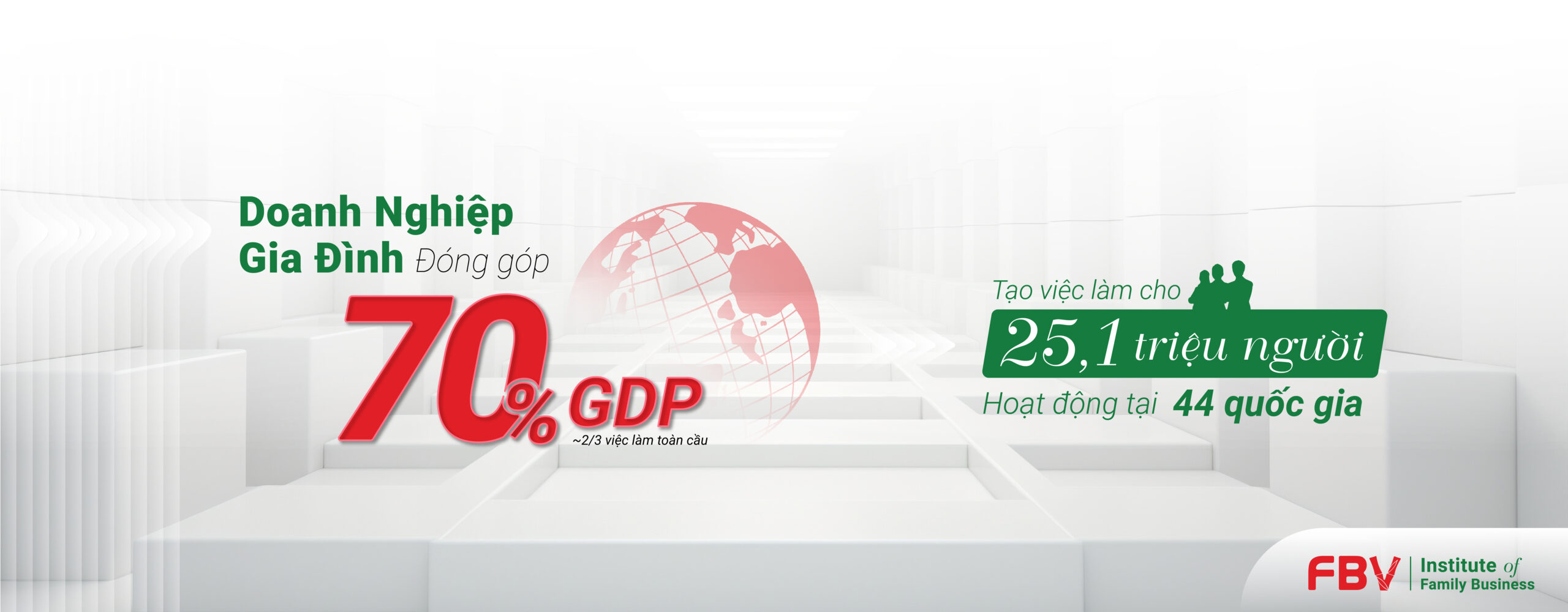
The latest update of the 500 Family Business Index once again confirms the central role of family businesses in the global economy. With a total workforce of up to 24.5 million people, these companies not only create economic value but also act as pillars of stability in a volatile global context. The average age reaches 82 years, with 34% existing for more than a century – an impressive figure that shows the cross-generational adaptability of this model. More than 75% of companies have moved to the second generation or beyond, showing that succession governance is the core capability for sustainability.
In terms of industry structure, nearly half of the top 500 operate in industry, consumer goods, and automobiles. These are sectors suitable for the long-term investment philosophy of the family model. However, the generational transition wave is driving many companies to expand into fast-growing sectors such as technology, modern retail, and pharmaceuticals. At the same time, the proportion of non-family CEOs has increased to 56%, reflecting the trend of professionalizing governance, though strategic orientation remains largely in the hands of family members through roles on the board of directors.
Another important shift is the stronger commitment to ESG standards (Environment – Social – Governance). More than 50% of family businesses on the list have published independent ESG reports, proving the move from a discreet tradition to a modern, transparent, and globally responsible model. In the Asia-Pacific region, this area accounts for 16% of the companies, with notable representatives such as Samsung, Tata, and Ayala showing the breakthrough potential of emerging economies if they invest properly in succession, governance, and globalization strategy.
Vietnamese family businesses in 2045?
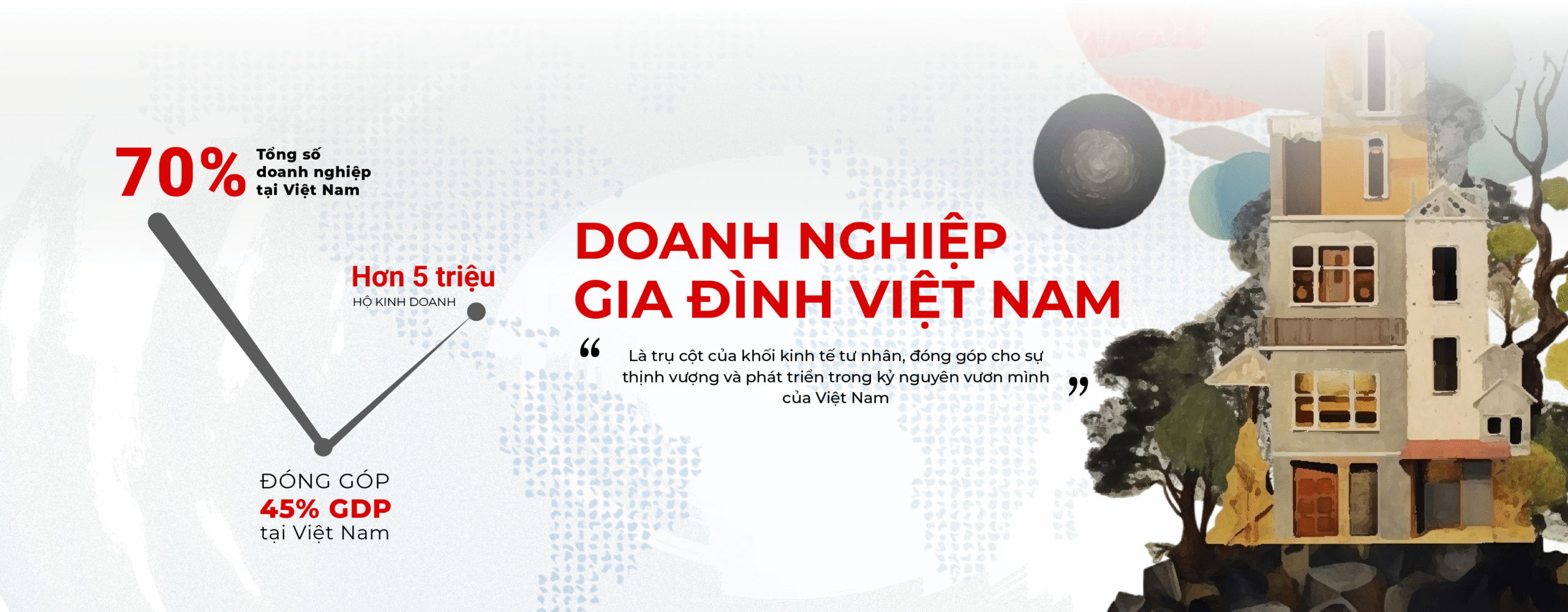
The private economy of Vietnam has been and is contributing an important part to the overall development of the national economy. Currently, this sector accounts for about 40% of GDP and creates more than 70% of total jobs in the economy (Government, 2023). Family businesses in particular not only promote growth but also create great value for the economy. When Vietnam celebrates its 100th anniversary in 2045, the question arises: Can the Vietnamese private economy rise strongly and bring family businesses into the top 500 leading family businesses in Asia, or even register on the world map?
Although the private economy is developing strongly and playing an important role in national prosperity, most Vietnamese family businesses are still young and have not reached global scale. To enter the list of the top 500 family businesses, Vietnamese companies need to build long-term strategies, invest in transparent governance, standardize management models, and prepare for structured power transition. Although these investments may not generate immediate profit, they will create a solid foundation for the survival and sustainable growth of family businesses in the future.
Reference
EY. (2025, March). Largest 500 family businesses amount to the world’s third-largest economy. EY Global. https://www.ey.com/en_gl/newsroom/2025/03/largest-500-family-businesses-amount-to-world-s-third-largest-economy
EY. (2025). Family Business Index 2025. EY Vietnam. https://www.ey.com/en_vn/insights/family-enterprise/family-business-index
Chính phủ. (2023, March 18). Phát triển kinh tế tư nhân: Đòn bẩy cho một Việt Nam thịnh vượng. Chính phủ. https://xaydungchinhsach.chinhphu.vn/phat-trien-kinh-te-tu-nhan-don-bay-cho-mot-viet-nam-thinh-vuong-119250318000126845.htm
Source: FBV Team