

[Saigon Entrepreneur Online] The family business model in Vietnam is expanding and growing. However, the process of generational succession in recent years has created major challenges and barriers, requiring family businesses to design careful strategies.
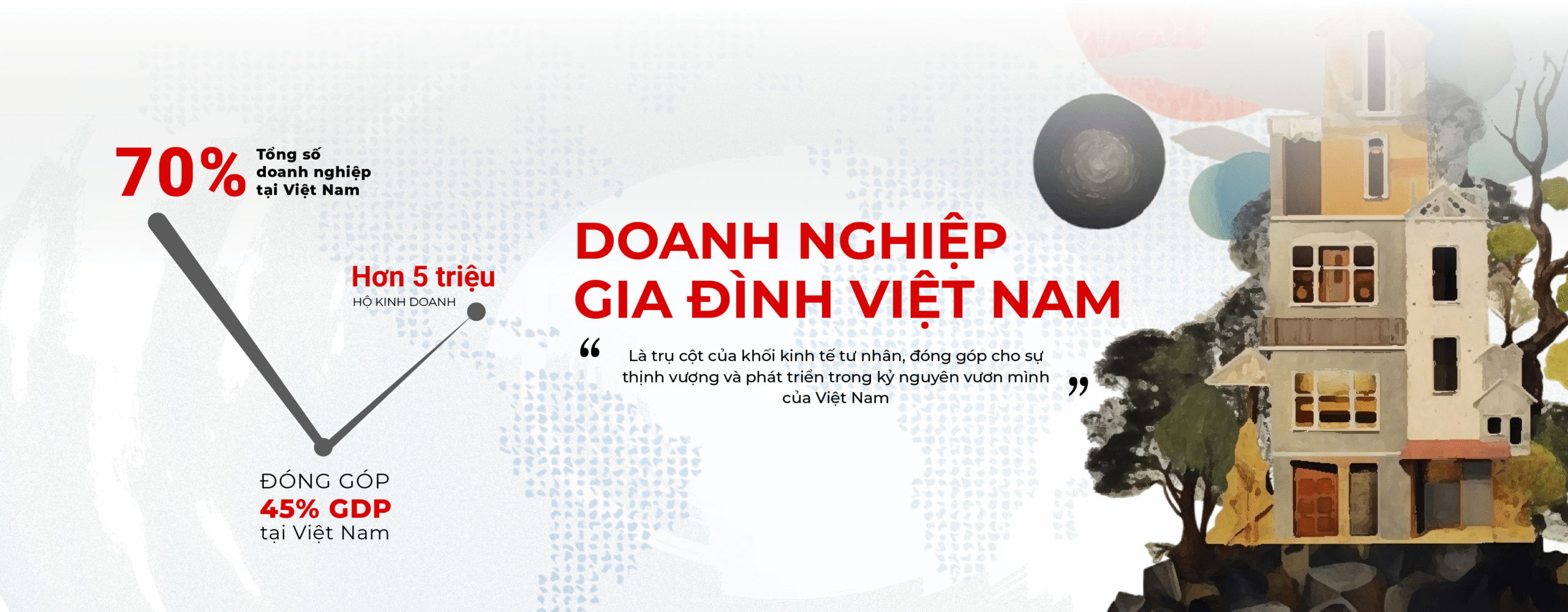
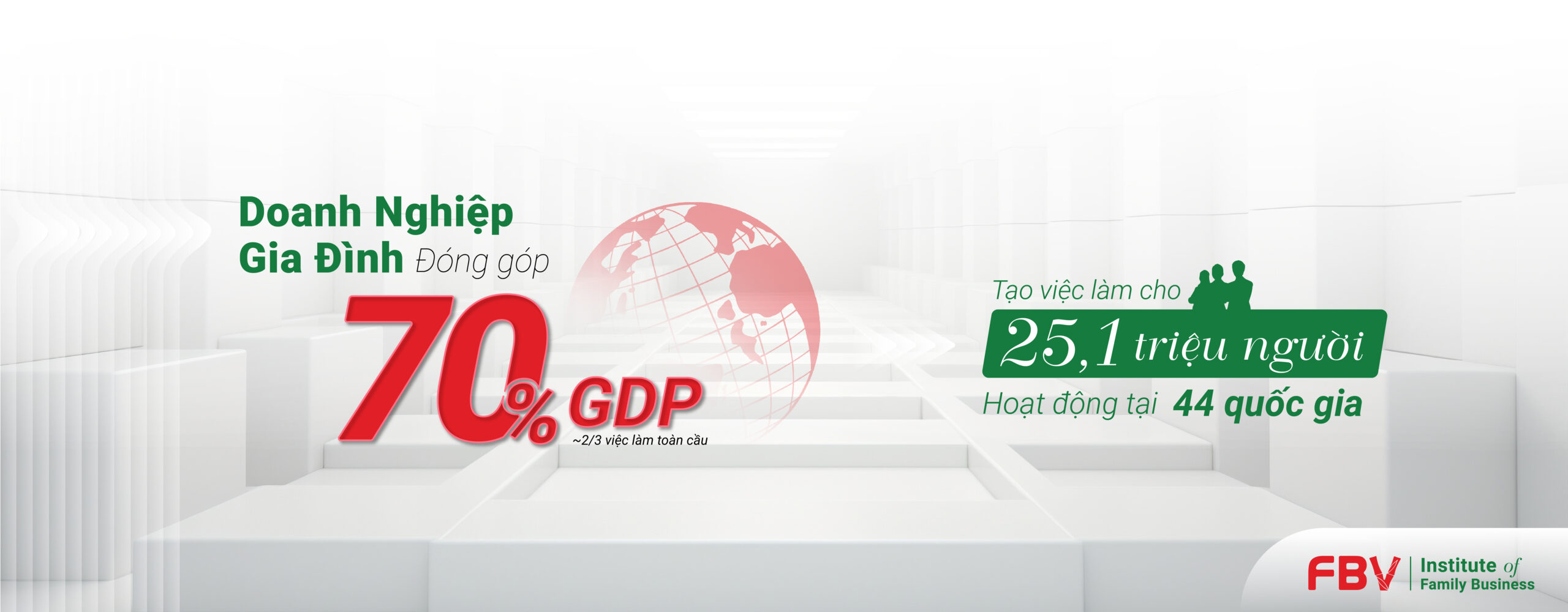
Family businesses account for more than 70%
According to statistics, Vietnam has 800,000 operating businesses, of which 98% are private enterprises. Although the number is very large, most private enterprises are classified as small or micro businesses, contributing 40% to national GDP.
Especially among private enterprises, more than 70% are family businesses or have characteristics of family businesses such as: family members control and hold key management positions, family members hold the majority of shares, family members make decisions on strategic or investment issues, and business culture takes its “spirit” from family culture.
In developed countries such as Japan, Korea, the US, or the EU, family businesses account for more than 60% of enterprises, are considered the oldest business model in the world, play a pillar role, and contribute to national economic development through creativity and preservation of national culture in the process of global integration.
In Vietnam, the economy after 1986 began to form the first family businesses (such as Bitis, Minh Long, An Phuoc, Thanh Thanh Cong, Nova Group, Anpha Nam), so they faced many difficulties because of small scale, low access to social resources, and lack of strong support from the State and community. Only in the last 10 years has this issue been studied and encouraged, so Vietnamese family businesses have more disadvantages and develop more slowly than in the region and the world. Currently, only about 50 family businesses are listed on the stock exchange and have truly “transformed” in scale.
In addition, building successors and preparing capacity for succession are not yet systematic and are only at the stage of transferring to the second generation (F2), so they are still “young” in capacity and long-term vision. Moreover, the ability of Vietnamese family businesses to expand globally is still limited because of scale and slow adaptability, and they are also “cautious” in internationalization when bringing outside capacity into shareholding and governance.
The driving force of family businesses
The driving force of family businesses is formed by founders with entrepreneurial spirit. However, to overcome difficulties and gather initial resources, they relied on internal family members such as spouses, siblings, and close relatives. They built the business together, owned business values or secrets, created, and led the company through challenges. In general, the first factor is taking family as the foundation of development, family trust and unity make governance easier and risks more shareable for family businesses.
In addition, Vietnamese culture values family and always wants to leave a legacy to children, so the motivation to pass on business to the next generation has created a link from family to clan and nation.

The challenge of successors
Family businesses in Vietnam are now in the stage of succession to the second generation (F2). The biggest challenge for successors is the very large “shadow” of the founders. To continue well, the second generation (F2) needs to skillfully implement five pillars of business and family including: protecting the core of business process, products, and family creativity; protecting the family name in business and social relations; proving leadership ability through practice; skills in managing people across generations; and finally the ability to optimize business relations between family and company.
In principle, building successors must be planned for 10 years depending on company size and complexity of leadership generations. This plan includes capacity building, job challenges, delegated authority, and seeking external support. Currently, some large family businesses in Vietnam have done this systematically, even more strictly than in some Asian countries.
Huỳnh Phước Nghĩa, MA – Deputy Director of the Institute of Innovation, University of Economics Ho Chi Minh City (UEH) said: “The successor generation of family businesses in Vietnam must know the challenges they face, especially the business environment, building talents of the same generation, and applying leadership capacity in the new environment. Founders must also be aware that if they do not adapt, successors will face difficulties and failures. Many people think that the greatest barrier for successors is generational conflict in governance. In fact, that is not the case. The core is the ability to lead the next stage of development of family businesses. Therefore, strategy must balance the old foundation with creativity in the new context, and aim for sustainable development of family businesses instead of falling into conflict and competition.”
According to reports, only 20% of family businesses are able to plan smooth succession, while most must cope with succession crises. Therefore, family businesses in Vietnam are now handling many relationships and adjusting business models to adapt to changes, in which they have built a family governance code of conduct for all members involved or related to company interests. This code governs delegation, legal basis of assets (physical assets, intellectual property/trade secrets), and behaviors when family businesses face difficulties.
Not all family businesses in Vietnam succeed in succession, but they must establish rules that prioritize business development and seek consensus from family members. In addition, family culture that influences business must be balanced, prioritizing governance transition to the next generation to absorb new values, create new value, build employee unity, and adapt to the times, especially by enhancing digital transformation in the context of the strong industrial revolution 4.0. Only then can Vietnamese family businesses grow and develop sustainably in the next stage of succession.
A reality in Vietnam today is that there are still no systematic and professional training programs on family business governance. Meanwhile, in the world, many famous universities have included family business into research and teaching such as: NUS Business School with a department for training, research, and consulting on family business ; Kellogg Business School with a center for research, training, and consulting on family business from entrepreneurship, governance, capitalization, and internationalization; Harvard and MIT with training programs, research centers, and academic journals on this issue.
“I think that with the context of Vietnam, the family business model will develop and contribute more to the economy in the future, so majors in governance, entrepreneurship, or innovation need to integrate family business issues into research and teaching.” – ThS. Huỳnh Phước Nghĩa said.
Author: ThS. Huynh Phuoc Nghia.
Source: Saigon Entrepreneur Online.